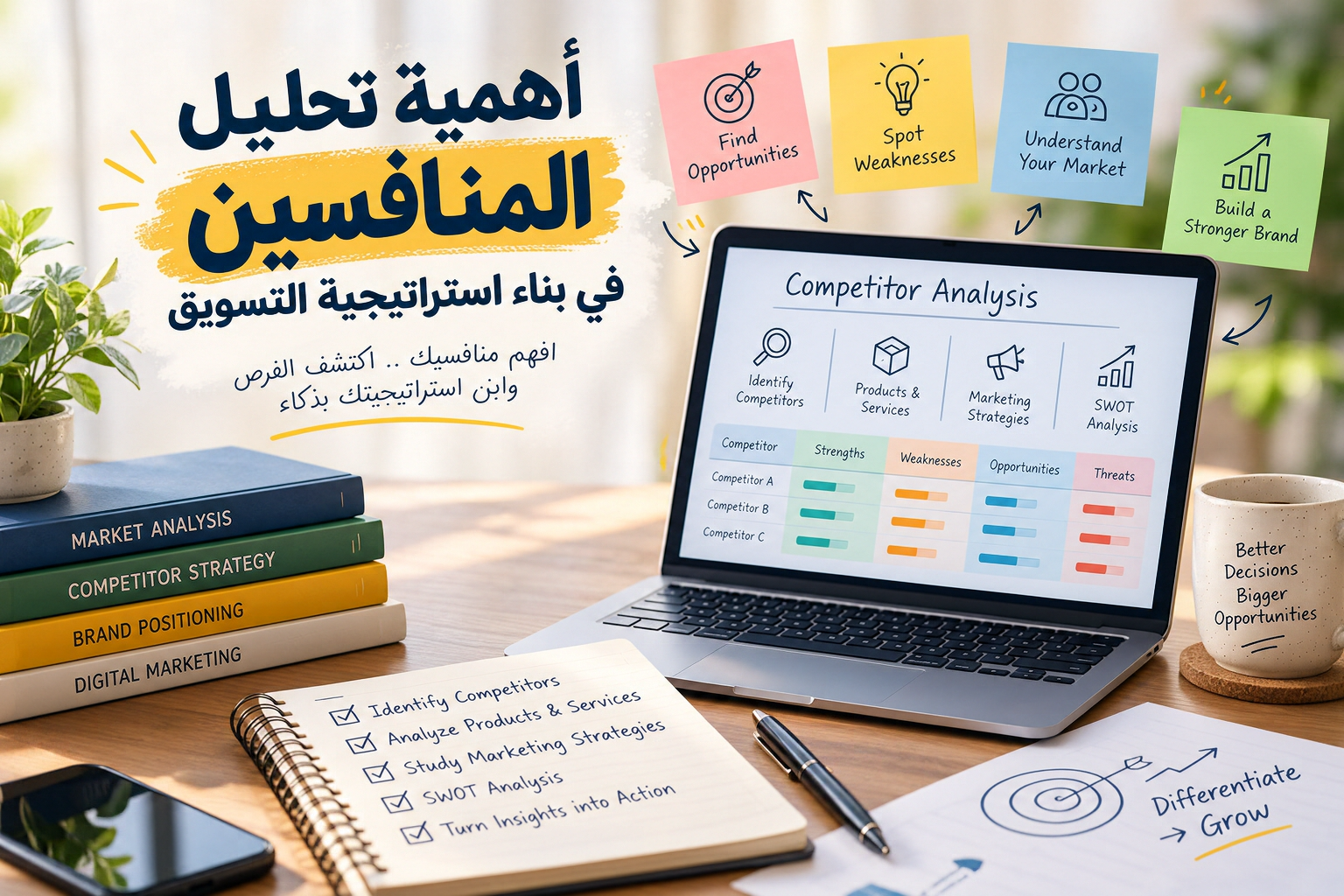
أهمية تحليل المنافسين في بناء استراتيجية التسويق
فهم منافسيك أمر بالغ الأهمية لتطوير استراتيجيات تسويق فعالة. يساعدك تحليل المنافسين على تحديد فرص السوق وتجنب المزالق المحتملة ووضع علامتك التجارية بشكل فعال.
ما هو تحليل المنافسين؟
تحليل المنافسين هو عملية تحديد منافسيك وتقييم استراتيجياتهم لتحديد نقاط قوتهم وضعفهم بالنسبة لمنتجك أو خدمتك.
المكونات الرئيسية لتحليل المنافسين
1. حدد منافسيك
ابدأ بتصنيف المنافسين إلى ثلاث مجموعات:
- المنافسون المباشرون: تقديم منتجات/خدمات مماثلة لنفس السوق المستهدف
- المنافسون غير المباشرين: تقديم منتجات/خدمات مختلفة تلبي نفس الحاجة
- المنافسون البديلون: تقديم بدائل قد يختارها العملاء بدلاً من ذلك
2. تحليل منتجاتهم وخدماتهم
افحص:
- ميزات المنتج والجودة
- استراتيجيات التسعير
- قنوات التوزيع
- نهج خدمة العملاء
3. دراسة استراتيجيات التسويق الخاصة بهم
انظر إلى:
- موقع العلامة التجارية والرسائل
- وجود ومشاركة وسائل التواصل الاجتماعي
- جهود تسويق المحتوى
- حملات الإعلان
- تكتيكات تحسين محركات البحث والتسويق الرقمي
4. تقييم نقاط القوة والضعف لديهم
استخدم تحليل SWOT لتحديد:
- ما يفعلونه بشكل جيد (وكيف يمكنك المنافسة)
- أين يقصرون (فرص للتمييز)
- التهديدات السوقية التي يشكلونها
- الفرص في السوق التي يفوتونها
أدوات لتحليل المنافسين
- SEMrush/Ahrefs: للحصول على رؤى تحسين محركات البحث والتسويق الرقمي
- SimilarWeb: لتحليل حركة المرور والجمهور
- Social Blade: لمقاييس وسائل التواصل الاجتماعي
- Google Alerts: لمراقبة إشارات المنافسين
- مراجعات العملاء: على منصات مثل Google أو Yelp أو مواقع خاصة بالصناعة
تطبيق الرؤى على استراتيجيتك
بمجرد جمع معلومات المنافسين:
- التمييز: ابحث عن زوايا فريدة تميزك
- سد الفجوات: حدد احتياجات العملاء غير الملباة
- التسعير الاستراتيجي: ضع تسعيرك بشكل تنافسي
- تحسين الرسائل: صياغة عروض قيمة أكثر إقناعاً
- تحسين القنوات: التركيز على قنوات التسويق الأكثر فعالية
الأخطاء الشائعة التي يجب تجنبها
- نسخ المنافسين بدلاً من إيجاد موقعك الفريد
- التركيز فقط على المنافسين المباشرين
- إجراء التحليل مرة واحدة فقط
- تجاهل المنافسين الناشئين الأصغر
- عدم تتبع التغييرات بمرور الوقت
الخلاصة
تحليل المنافسين لا يتعلق بنسخ ما يفعله الآخرون - بل يتعلق بفهم مشهد السوق لاتخاذ قرارات استراتيجية أفضل. تساعدك المعلومات التنافسية المنتظمة على البقاء مرناً واستجابةً لتغيرات السوق.
هل تحتاج إلى مساعدة في إجراء تحليل شامل للمنافسين؟ استكشف خدماتي الاستشارية المصممة لمنحك رؤى تنافسية قابلة للتنفيذ.